


Beyond Raw Fish: The Traditional Diversity of Sushi
Beyond Raw Fish: The Traditional Diversity of Sushi
"The mark of a great sushi chef isn't their maguro. It's their tamago. The egg tells you everything."
— Traditional sushi sayingThink sushi means raw fish only? Traditional sushi counters have served cooked eel, sweet egg, cured mackerel, and cucumber rolls for centuries. These aren't "alternatives"—they're essential to the sushi tradition. Here's your guide to the full spectrum.
In our first blog, we revealed that sushi isn't about raw fish—it's about perfectly seasoned rice. In Blog 2, we explored why that rice takes decades to master. Today, we're going to shatter another myth: the idea that "real" sushi is all about raw fish.
The Revelation: Sushi Has Always Been Diverse
Here's a truth that surprises most people: some of the most traditional, most respected sushi items contain no raw fish at all.
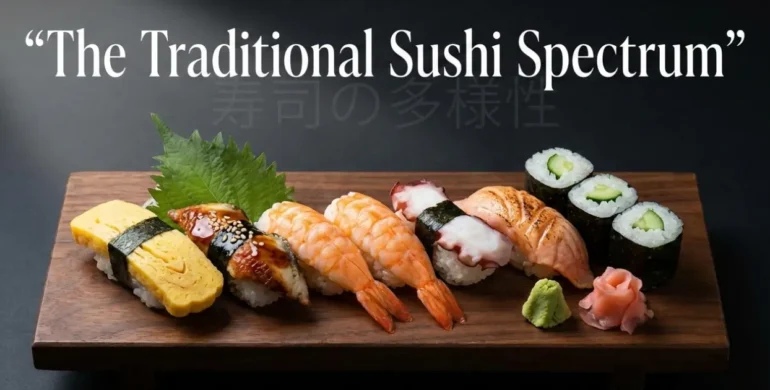
Walk into a high-end sushi restaurant in Tokyo—the kind where the chef has 40 years of experience and a Michelin star—and you'll find tamago (sweet egg), unagi (grilled eel), ebi (cooked shrimp), tako (boiled octopus), and various cured preparations. Not as "beginner options" or concessions to squeamish diners, but as essential expressions of the sushi craft.
There's a famous test among sushi professionals: order the tamago. If a restaurant can't make excellent sweet egg omelette—if the layers aren't distinct, if the sweetness isn't balanced, if the texture isn't perfect—then they probably can't make excellent sushi, period. The egg reveals everything about a chef's precision, patience, and understanding of fundamentals.
This diversity isn't modern fusion or Western adaptation. Sushi's origins as street food in Edo-period Tokyo (1600s-1800s) included cooked and preserved items out of necessity. Before refrigeration, preservation techniques like grilling, vinegar-curing, and salting were essential. These methods weren't compromises—they became traditions because they enhanced flavor, created textural variety, and demonstrated mastery.
Why the "Raw Fish" Myth Persists
When sushi arrived in the West in the 1960s-70s, it was marketed as exotic and daring—"eating raw fish" became the selling point. Ironically, this Western emphasis on raw fish actually diverged from authentic Japanese sushi practice, which has always valued balance and variety over any single preparation method.
The result? Generations of people who think they "don't like sushi" because they don't like raw fish—missing out on a culinary tradition that offers far more diversity than they realize.
Cooked & Grilled: The Warm Traditions
Let's explore the cooked items that have been part of sushi for centuries—items that showcase a chef's skill just as much as (if not more than) raw fish preparations.
Tamago: The Ultimate Test of a Chef
Tamago (玉子) is a slightly sweet, layered Japanese omelette served as nigiri. It looks simple—just egg on rice—but creating perfect tamago requires extraordinary precision.

What Makes Tamago Difficult
The layering technique: Tamago is made by cooking multiple thin layers of seasoned egg mixture in a rectangular pan (makiyakinabe). Each layer must be perfectly thin, evenly cooked, and rolled while still hot to create distinct layers that hold together.
The flavor balance: The egg mixture is seasoned with dashi (fish stock), mirin (sweet rice wine), sugar, and soy sauce. Too much sugar and it's a dessert. Too little and it's bland. The balance must complement the rice without overwhelming it.
The texture: Perfect tamago is firm but tender—never rubbery, never dry. It should hold its shape when sliced but yield gently when you bite into it. Achieving this consistency requires exact temperature control and timing.
The appearance: The layers should be visible and uniform. The color should be golden yellow with no burnt spots or uneven cooking. The surface should have a subtle gloss from the sweet glaze often brushed on top.
This is why seasoned sushi eaters order tamago to evaluate a restaurant. It reveals whether the chef has mastered fundamentals—heat control, seasoning balance, technique precision, patience. If they can't make great tamago, what else are they cutting corners on?
Traditional placement: In omakase (chef's choice) meals, tamago is often served at the end, acting as a palate cleanser and gentle finish to the progression. Its subtle sweetness provides closure, like a light dessert that doesn't overpower.
Unagi: The Glossy, Caramelized Classic
Unagi (鰻) is freshwater eel that's been grilled and glazed with tare, a sweet-savory sauce made from soy sauce, mirin, sugar, and the eel's own rendered fat. This is traditional Japanese sushi at its most luxurious.

Why unagi is never served raw: Freshwater eel contains toxins in its blood that must be deactivated through cooking. But more importantly, raw eel would be texturally unpleasant and flavorless. The kabayaki grilling process—steaming or parboiling first, then grilling over charcoal while basting with tare—transforms the eel completely.
The Magic of Unagi Preparation
Texture transformation: Grilling renders the fat, making the flesh tender and almost buttery. The skin becomes slightly crispy while the meat stays succulent.
Flavor development: The tare sauce caramelizes during grilling, creating layers of umami, sweetness, and subtle char. Each basting adds depth.
The gloss: That beautiful sheen you see on unagi? It's from the tare reducing and clinging to the eel's surface—a sign of proper technique and quality sauce.
Aromatics: Grilled unagi smells incredible—smoky, sweet, rich. The aroma is part of the experience.
Unagi has been a beloved sushi topping for centuries. It's not a modern addition or a gateway item for people nervous about raw fish—it's a cornerstone of traditional Edomae sushi. A restaurant without good unagi is missing a fundamental part of the sushi tradition.
Sustainability note: Wild unagi populations have declined significantly due to overfishing and habitat loss. Many restaurants now use farmed unagi or seasonal alternatives. At SushiMen, we're mindful of sourcing and offer unagi responsibly.
Ebi: The Sweet Simplicity of Cooked Shrimp
Ebi (海老) refers to shrimp or prawn that's been cooked—typically boiled or steamed—and served with its beautiful curved shape intact. The preparation is simple, but the execution requires precision.
What Makes Great Ebi
The curve: Ebi is traditionally served curved, which requires skewering the shrimp before cooking to prevent it from curling up completely. The elegant arch is both aesthetic and practical—it sits beautifully on the rice.
The snap: Perfectly cooked ebi has a firm, snappy texture—not soft or mushy, not tough or rubbery. This requires exact timing and temperature control.
The sweetness: Fresh shrimp has natural sweetness that's enhanced by proper cooking. Overcook it and that sweetness disappears, replaced by blandness.
The color: Beautiful orange-pink coloration indicates proper cooking and fresh shrimp. Gray or dull color suggests old shrimp or poor preparation.
Ebi is often considered a "safe" choice, but at high-end restaurants, it's anything but simple. The quality of the shrimp, the precision of cooking, and the presentation all reveal a chef's attention to detail.
Tako: The Tender-Chewy Octopus
Tako (蛸) is octopus that's been boiled to achieve a specific tender-yet-chewy texture. It's one of the most distinctive items on a sushi menu, both visually (with its purple-white coloring and visible suction cups) and texturally.
The Challenge of Tako Preparation
- Tenderizing: Raw octopus is extremely tough. Traditional methods include massaging it with salt, pounding it, or freezing it to break down muscle fibers before cooking.
- Cooking time: Too little and it's rubbery and nearly inedible. Too much and it becomes tough again. There's a sweet spot—usually 40-60 minutes of gentle simmering—where it becomes tender with just the right amount of chew.
- Slicing: Tako must be sliced at the right thickness and angle. Too thick and it's chewy; too thin and it loses its satisfying texture.
- Presentation: The distinctive suction cups should be visible, and the purple-white gradient of the skin should be preserved. This visual appeal is part of the experience.
Tako offers a unique texture experience in sushi—substantial and chewy without being tough, with a clean ocean flavor that's mild and pleasant. It's not for everyone, and that's fine. But dismissing it as "weird" misses the point: it's a traditional item that showcases how sushi celebrates diverse textures and flavors.
Kani: The Sweet Versatility of Crab
Kani (蟹) encompasses various crab preparations in sushi. Whether steamed, boiled, or in the case of soft-shell crab, lightly fried, crab brings sweet, delicate seafood flavor and tender texture.
Crab Varieties in Sushi
Snow crab (zuwaigani): Delicate, sweet, often used in nigiri or as a topping. The long, thin legs are prized for their texture.
King crab (tarabagani): Rich, substantial, with larger meat portions. More assertive flavor than snow crab.
Soft-shell crab: Seasonal delicacy (when crabs molt their shells). Often lightly fried and used in rolls, offering crispy exterior and tender interior.
Real vs. imitation: Many Western sushi restaurants use imitation crab (surimi, made from white fish). Real crab is sweeter, more delicate, and far superior in flavor and texture.
At SushiMen, when we feature crab, we're transparent about sourcing. Real crab is a premium ingredient that deserves to be highlighted, not hidden in overly sauced rolls.
Cured & Preserved: The Original Techniques
Before refrigeration existed, preservation was necessity. But these techniques persisted not just for safety—they create flavors and textures that can't be achieved any other way.
Shime-Saba: The Vinegar-Cured Classic
Shime-saba (しめ鯖) is mackerel that's been salt-cured and then vinegar-cured. Technically it's not cooked, but it's absolutely not raw in the way most people think of raw fish.
The Shime-Saba Process
Step 1 - Salt cure: Fresh mackerel fillets are heavily salted and left for 30-60 minutes. This draws out moisture, firms the flesh, and begins the preservation process.
Step 2 - Rinse and dry: Salt is rinsed off, and the fish is patted dry. This step must be thorough—excess salt would make the final product inedible.
Step 3 - Vinegar cure: Fillets are submerged in rice vinegar for 20-40 minutes (timing depends on thickness and desired intensity). The vinegar further firms the texture and adds tangy, complex flavor.
The result: Firm texture, opaque appearance (no longer translucent), complex tangy-sweet flavor, and extended shelf life. The silver skin (hikari) is left on, making it part of the hikari-mono (shiny fish) category.
Shime-saba is a traditional Edomae essential. It's assertive, flavorful, and not for everyone—but it's a perfect example of how preservation techniques became culinary traditions because they create flavors worth preserving.
Why mackerel needs this treatment: Mackerel is an oily fish that spoils quickly and can have strong flavors when simply served raw. The curing process tames the oils, firms the texture, and creates a balanced, refined flavor profile that's far more interesting than raw mackerel would be.
Vegetarian Classics: Pure & Simple
Sushi isn't just about seafood. Vegetarian items have been part of the tradition from the beginning, offering refreshing contrast, textural variety, and palate-cleansing properties.

Kappa Maki: The Cucumber Roll
Kappa maki (かっぱ巻き) is a simple roll of cucumber wrapped in rice and nori. It's named after the kappa, a water deity from Japanese folklore who supposedly loves cucumbers.
Why Kappa Maki Matters
Palate cleanser: The cool, refreshing crunch of cucumber resets your palate between richer pieces, much like gari (pickled ginger) but with textural contrast.
Hydration: Cucumber adds moisture and freshness to a meal that can sometimes feel rich or dense.
Simplicity as test: Like tamago, a well-made kappa maki reveals fundamentals. Is the cucumber crisp and fresh? Is it cut properly (thin enough to bite through easily, thick enough to provide crunch)? Is the rice-to-filling ratio balanced?
Don't dismiss kappa maki as "boring" or "just a filler." In a traditional sushi progression, it serves a specific purpose—providing textural and flavor contrast that enhances your appreciation of the fish items around it.
Takuan Maki: The Pickled Radish Roll
Takuan (たくあん) is pickled daikon radish—bright yellow, crunchy, sweet-tangy, and traditional. It brings color, crunch, and a distinctive fermented complexity to sushi.
Understanding Takuan
The pickling process: Daikon radish is sun-dried, then pickled in rice bran with salt, sugar, and sometimes turmeric (which gives it the yellow color). The fermentation creates complex umami and tang.
Flavor profile: Sweet-tangy with earthy undertones. The fermentation adds depth that fresh radish doesn't have.
Texture: Firm, crunchy, satisfying snap. Provides textural contrast against softer fish items.
Traditional status: Takuan has been part of Japanese cuisine for centuries, not just in sushi but as a side dish with rice. Using it in maki rolls is a natural extension of this tradition.
If you've never tried takuan, you're missing out on a traditional flavor that showcases how fermentation and pickling create complexity. It's not "weird"—it's traditional, intentional, and delicious when you understand what you're tasting.
Kampyo Maki: The Dried Gourd Roll
Kampyo (かんぴょう) is dried gourd that's been rehydrated and simmered in a sweet-savory dashi-based broth. It has a unique ribbon-like appearance and a flavor that's both earthy and subtly sweet.
Why Kampyo Is Traditional
- Historical importance: Before fresh fish was readily available everywhere, kampyo provided a shelf-stable sushi option. It could be prepared in advance and kept for days.
- Texture: Tender but with slight chew—different from crunchy vegetables or soft fish. Adds textural variety to a sushi meal.
- Flavor absorption: Kampyo soaks up the cooking liquid (dashi, soy, sugar, mirin), becoming a vehicle for umami-rich, subtly sweet flavor.
- Old-school authenticity: Ordering kampyo maki at a traditional restaurant signals that you understand sushi beyond the surface level.
Inari Sushi: The Sweet Tofu Pocket
Inari (稲荷) is sushi rice stuffed into pockets of aburaage (fried tofu) that have been simmered in sweet broth. Technically it's not nigiri or maki, but it's absolutely traditional sushi.
Inari is named after Inari, the Shinto deity of rice, whose messengers are foxes—and foxes supposedly love fried tofu. It's sweet, comforting, and often served at festivals, picnics, and home gatherings. Some consider it "home-style" rather than restaurant sushi, but that doesn't make it less authentic.
Modern vegetarian options: While traditional sushi offers these classics, modern restaurants have expanded to include avocado (now widely accepted), asparagus, pickled vegetables, and even creative options like roasted peppers or marinated mushrooms. These aren't "less authentic"—they're the natural evolution of sushi's adaptability.
Aburi: The Fire-Kissed Tradition
Aburi (炙り) refers to lightly searing the surface of fish or seafood. While blowtorches are common today, the concept of using controlled fire to transform sushi is centuries old.

What Aburi Does
The Transformation of Fire
Renders fat: Heat causes fat to begin melting, making fatty fish like salmon belly or toro even more luscious and buttery in texture.
Adds aromatics: The slight char creates smokiness—subtle but distinct. You're tasting the Maillard reaction (the same process that makes grilled meat delicious).
Changes texture: The surface becomes slightly crispy or caramelized while the interior remains cool and raw. This temperature and texture contrast is incredibly satisfying.
Enhances flavor: Heat brings out different flavor compounds in the fish. Aburi salmon tastes noticeably different from raw salmon—richer, more complex, with that subtle smoke note.
Visual appeal: The char marks and caramelization create visual interest. It looks artisanal, crafted, intentional.
Traditional vs. Modern Aburi Methods
Evolution of Technique
Traditional methods:
- Charcoal grilling: Holding fish over binchotan (white charcoal) for precise, controlled heat
- Hot metal skewer: Heating a metal rod and pressing it against specific spots on the fish
- Open flame: Quickly passing fish through flame for minimal but effective searing
Modern application:
- Blowtorch: Precise, controllable, allows for searing individual pieces quickly during service
- Same concept, different tool: The goal remains the same—controlled application of heat to transform flavor and texture
The best applications for aburi include fatty fish (salmon belly, otoro, hamachi belly), oily fish (mackerel, sardines), and items where fat benefits from rendering (engawa/halibut fin, certain shellfish).
The experience of aburi: When done right, you get warm fish with cool rice—a temperature contrast that's surprisingly delightful. The aromatic smoke hits your nose before you taste it. Then the texture play: slight crisp, melting fat, tender fish, yielding rice. It's a multi-sensory experience that demonstrates why sushi is craft, not just cuisine.
Building Your Balanced Sushi Meal
Now that you understand the full spectrum of traditional sushi, let's talk about how to compose a meal that showcases this diversity.
The Traditional Progression
In Japan, sushi meals often follow a thoughtful progression from light to rich, delicate to bold, lean to fatty. This isn't snobbery—it's about maximizing your ability to taste and appreciate each piece.
A Traditional Sushi Progression
Start light and delicate:
• White fish (hirame/flounder, tai/sea bream, suzuki/sea bass)
• Mild flavor, clean finish, prepares your palate
Move through silver-skinned fish (hikari-mono):
• Saba (mackerel), kohada (gizzard shad), aji (horse mackerel)
• More assertive flavor, often cured or treated
Progress to medium-rich fish:
• Sake (salmon), hamachi (yellowtail), kanpachi (amberjack)
• Richer flavor and fattier texture than white fish
Include cooked items for variety:
• Ebi (shrimp), unagi (eel), tako (octopus)
• Provides textural contrast and flavor diversity
Peak with fatty offerings (if having them):
• Toro (fatty tuna), rich uni (sea urchin), fatty salmon belly
• Most intense, luxurious flavors
Finish clean:
• Tamago (sweet egg) or simple maki (cucumber, takuan)
• Palate cleanser, gentle closure, completes the experience
Example Balanced Meal (12 pieces)
A Well-Composed Sushi Experience
- 1-2: Hirame (fluke) or tai (sea bream) - starting light
- 3: Saba (mackerel) - introducing assertive flavor
- 4-5: Sake (salmon) and hamachi (yellowtail) - building richness
- 6: Ebi (cooked shrimp) - textural break, familiar comfort
- 7: Unagi (eel) - cooked richness, different flavor profile
- 8-9: Maguro (lean tuna) and if you want, chu-toro (medium fatty tuna)
- 10: Aburi salmon - fire-kissed for variety
- 11: Kappa maki (3-4 pieces cucumber roll) - refreshing palate reset
- 12: Tamago - sweet finish, completes the journey
This progression offers: lean and fatty fish, raw and cooked items, delicate and bold flavors, multiple textures, and a logical flow that respects your palate's ability to appreciate each piece.
Your Preferences Are Valid
Here's what's important: there's no wrong way to enjoy sushi if you're being honest about your preferences.
If you prefer mostly cooked items: That's perfectly valid. A meal of tamago, unagi, ebi, tako, kappa maki, and takuan maki is authentically traditional and delicious.
If you only want raw fish: Also fine. Some people love the clean, oceanic flavors of raw fish and want to focus there.
If you avoid certain textures: Completely understandable. Not everyone loves the chewiness of octopus or the richness of fatty tuna. Order what appeals to you.
If you want to explore gradually: Start with familiar items (ebi, salmon) and slowly add one new thing each visit. Sushi appreciation is a journey, not a test.
At SushiMen, we offer this diversity because we understand that authentic sushi means honoring the full tradition, not just the parts that fit Western stereotypes. Whether you order all cooked items or go full omakase with raw specialties, you're experiencing real sushi.
The Nutritional Completeness of Sushi
One more point that deserves emphasis: sushi is a nutritionally complete meal, not an appetizer or snack.
What a Sushi Meal Provides
Protein: High-quality, easily digestible protein from fish, seafood, or egg. Variety means you're getting different amino acid profiles.
Complex carbohydrates: Properly prepared sushi rice provides sustained energy. It's not "empty carbs"—it's thoughtfully seasoned, nutritionally substantial rice.
Healthy fats: Omega-3 fatty acids from fish (especially salmon, mackerel, tuna). These are essential for heart health, brain function, and reducing inflammation.
Vegetables and fiber: Cucumber, radish, seaweed (nori), pickled ginger—all provide fiber, vitamins, and digestive benefits.
Minerals and micronutrients: Nori is rich in iodine, iron, and B vitamins. Fish provides selenium, vitamin D, and more. The variety means broad nutritional coverage.
Probiotics: Fermented elements like takuan and gari provide beneficial bacteria for gut health.
A typical sushi meal of 10-12 pieces plus miso soup is approximately 400-600 calories (depending on what you order), with 30-40g of protein, healthy fats, complex carbs, and micronutrients. This is a complete, balanced dinner, not something you need to supplement with other dishes.
Why this matters: Understanding that sushi is a complete meal changes how you order. You don't need to add fried appetizers, extra rolls, or desserts to "make it a meal." Sushi, when ordered thoughtfully, is the meal—satisfying, nutritious, and complete.
What This Means for Your Sushi Experience
You now understand that authentic sushi offers far more diversity than the "raw fish" stereotype suggests. You know that:
Key Takeaways
- Cooked items like tamago, unagi, ebi, and tako are traditional essentials, not alternatives
- Cured preparations like shime-saba showcase preservation techniques that became traditions
- Vegetarian options like kappa maki and takuan have been part of sushi for centuries
- Aburi techniques demonstrate how fire transforms flavor and texture
- A balanced sushi meal includes variety across preparation methods, textures, and flavors
- Your personal preferences are valid—there's no "correct" way to enjoy sushi
- Sushi is a nutritionally complete meal, not an appetizer
This knowledge liberates you. If you've been avoiding sushi because you "don't like raw fish," you now know you've been missing out on a rich tradition that includes countless options you'd probably love. If you're already a sushi enthusiast, you can now appreciate the full spectrum of items that showcase a chef's skill.
"Sushi is not about raw fish. It never was. It's about balance, seasonality, technique, and respect for ingredients—whether they're cooked, cured, or raw."
— Philosophy of traditional sushi craftYour Journey Through Sushi Diversity
The next time you order sushi—whether from SushiMen or anywhere else—challenge yourself to try something from each category:
Your Diversity Challenge
- One cooked item you've never tried (if you usually order raw)
- One raw item you've never tried (if you usually order cooked)
- One vegetarian item that's not just avocado
- One cured or aburi preparation
- Tamago—to test the restaurant's fundamentals
You might discover new favorites. You might confirm that certain textures aren't for you. Either way, you'll be experiencing sushi more completely, more authentically, and with deeper appreciation for the craft.
Experience the Full Spectrum of Traditional Sushi
At SushiMen, we honor sushi's true diversity. From perfect tamago to fire-kissed aburi, from traditional unagi to refreshing kappa maki—every item represents centuries of tradition and years of technique. Order this weekend and taste the difference.
Explore Our Full Menu Read Our Sushi Etiquette GuideIn our final blog of this series, we'll explore how sushi transformed as it traveled West—from Edo street food to Instagram sensation, from affordable lunch to $500 omakase. You'll learn about the luxury economy around bluefin tuna, why otoro costs what it costs, and how modern sushi both honors and diverges from tradition.
The Sushi Foundation Series
- Part 1: What Is Sushi? It's Not What You Think
- Part 2: The Art of Sushi Rice: Why Master Chefs Are Still Learning
- Part 3: Beyond Raw - Traditional Diversity of Sushi (You Are Here)
- Part 4: From Edo to Instagram - Sushi's Transformation (Coming Next Week)
🍣 Sushi is diversity. Sushi is balance. Sushi is for everyone. Eat well, eat mindfully.
There are no comments


